.svg)

Goederen, voertuigen of materieel tussen verdiepingen verplaatsen klinkt eenvoudig, totdat u de opties gaat vergelijken. Kiest u een lift die te klein is, dan moet u ladingen splitsen of klanten teleurstellen. Kiest u er een die te zwaar is uitgevoerd, dan hebt u budget en vloeroppervlak uitgegeven dat u niet nodig had. Het juiste verticale transport hangt af van wat u verplaatst, hoe vaak, hoeveel ruimte u hebt en met welk pand u werkt.
Bij Cargo Lift Systems beantwoorden we deze vraag al sinds 1936. Vier generaties Nederlands vakmanschap, duizenden liften gebouwd voor retail, logistiek, automotive en industrie, en stuk voor stuk op maat gemaakt in onze eigen fabriek in Vlaardingen. Wij verkopen niets uit voorraad, dus deze gids draait niet om het aanprijzen van een standaardproduct. Hij helpt u de drie belangrijkste lifttypes te begrijpen en te zien waar elk type echt op zijn plaats is.
Begin bij de lading, niet bij de lift
Bepaal, voordat u naar producten kijkt, drie dingen helder: wat u verplaatst, hoe zwaar het is en hoe vaak. Een werkplaats die één auto per dag omhoog brengt heeft heel andere behoeften dan een magazijn dat elke paar minuten pallets tussen verdiepingen verplaatst. Noteer de zwaarste reële lading, de grootste afmetingen die u moet vervoeren en uw drukste uur. Vrijwel elke vervolgbeslissing volgt uit die drie getallen.
Denk ook een jaar of twee vooruit. Panden veranderen van functie, bedrijven groeien en een lift is een langetermijnvoorziening. Wanneer wij klanten adviseren, is stap één altijd ‘vertel ons wat u nodig hebt’: uw ruimte, gewicht en werkstroom. Wat extra capaciteit nu is meestal goedkoper dan later vervangen of uitbreiden.
Goederenliften: gebouwd voor goederen en volume
Een goederenlift (of vrachtplatformlift) is ontworpen om materialen, voorraad, pallets en materieel betrouwbaar tussen niveaus te verplaatsen. De prioriteit ligt bij robuust, herhaalbaar heffen, niet bij esthetiek.
Goederenliften komen tot hun recht bij constante, frequente goederenstromen, bij zware of onhandige ladingen, of wanneer u uw mensen wilt verlossen van sjouwen over de trap. Ze passen in magazijnen, winkelmagazijnen, productielocaties en elk pand waar de logistiek verticaal verloopt. Omdat ze rond de lading worden ontworpen, kan de capaciteit ver meeschalen: onze hydraulische platformliften vervoeren veilig goederen tot 10.000 kg, van een compacte enkelmastuitvoering van 500 kg tot vierkolomsystemen voor twee ton en meer.
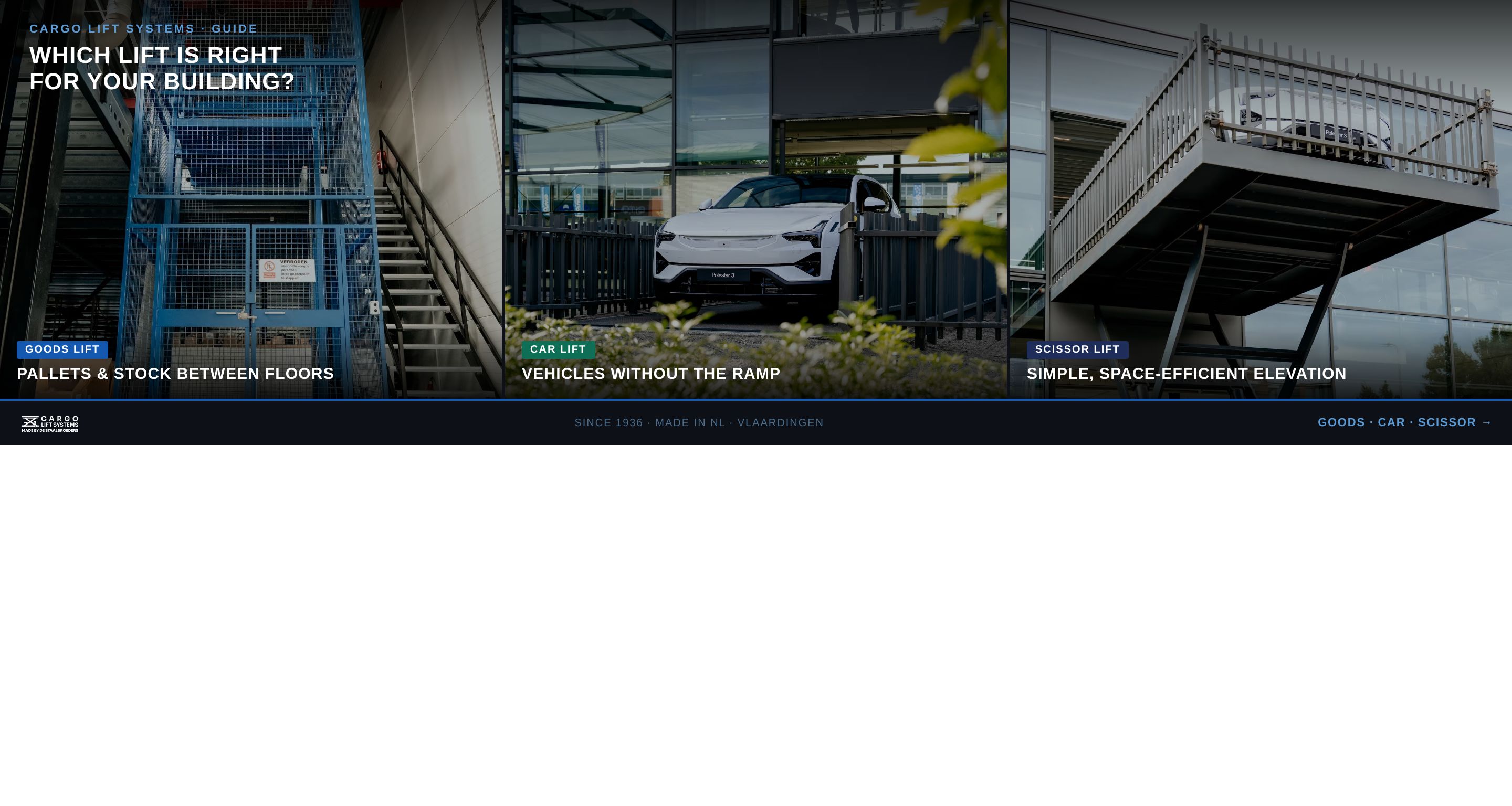
Dit is de categorie achter een groot deel van ons werk. Toen EasyPlant uit zijn productieopzet over meerdere verdiepingen groeide, ontwierpen en installeerden wij een hydraulische goederenlift op maat met frontafsluiting, waardoor wachttijden en handmatig tillen afnamen en het hele proces vlotter verliep. Als uw kernprobleem is ‘wij verplaatsen veel tussen verdiepingen en het moet snel, veilig en betrouwbaar’, dan is een goederenlift het startpunt.
Autoliften: verticaal transport voor voertuigen
Een autolift lost een specifiek en steeds vaker voorkomend probleem op: voertuigen tussen niveaus verplaatsen waar een traditionele hellingbaan te veel vloeroppervlak zou opslokken. In dichtbebouwd stedelijk gebied en in panden met meerdere lagen is een hellingbaan een luxe die veel locaties zich niet kunnen veroorloven. Een autolift wint die ruimte terug voor parkeren of ander gebruik: gemiddeld besparen onze klanten zo’n 40% van hun vloeroppervlak.
Autoliften passen van nature bij showrooms, parkeergarages, dealerbedrijven, particuliere garages en autoservicebedrijven. De ontwerpafwegingen verschillen van die bij goederenliften: de platformafmetingen moeten bij de voertuigen passen, de capaciteit moet rekening houden met het gewicht van een beladen auto en de cyclus moet soepel en stil zijn voor bestuurder of medewerker. Opties als bediening met afstandsbediening of smartcard, veiligheidsvergrendelingen en zacht starten en stoppen maken het dagelijks gebruik moeiteloos.
Een mooi voorbeeld is Polestar, waar auto’s naadloos van buiten de premium showroom in moesten rijden. Wij bouwden een autolift op maat waarmee voertuigen vanaf de straat naar binnen rijden, zonder hellingbanen en zonder concessies. Heeft wat u wilt heffen wielen en een motor, dan is dit uw categorie.
Schaarliften en heftafels: eenvoudig en ruimtebesparend
Een schaarlift gebruikt een vouwbaar schaarmechanisme om een platform verticaal op en neer te bewegen. Het mechanisme is compact in ingeschoven toestand, waardoor schaarliften en heftafels goed passen waar u een rechttoe rechtaan hoogteverschil moet overbruggen, of een laadplatform nodig hebt, zonder de ruimte van een volledige schacht.
Ze zijn vaak het juiste antwoord voor magazijnen, retail, laaddocks en krappe montageruimtes waar een vaste, no-nonsense verticale beweging volstaat. Compact en krachtig zijn ze een kosteneffectieve en duurzame keuze wanneer de hefhoogte beperkt is. Wij bouwen ook autoliften op schaarbasis wanneer de toepassing daarom vraagt. Het compromis is dat het schaarmechanisme het best werkt over kortere, vastomlijnde afstanden in plaats van veel verdiepingen te bedienen.
Zo beslist u: de praktische vragen
Zodra u uw lading, capaciteit en frequentie kent, helpen deze vragen om het veld te verkleinen:
Wat verplaats ik precies? Goederen en pallets wijzen richting een goederenlift; voertuigen richting een autolift; een eenvoudig hoogteverschil of dockbelading richting een schaarlift of heftafel.
Hoeveel ruimte heb ik en hoe kostbaar is die? Krappe stedelijke locaties profiteren het meest van liften die hellingbanen vervangen en het grondvlak beperken, met ruimtebesparingen die vaak rond de 40% liggen.
Welke hoogte moet worden overbrugd en hoeveel niveaus? Meerdere verdiepingen bedienen is iets anders dan één niveau overbruggen, en dat bepaalt welk mechanisme logisch is.
Hoe vaak draait de lift? Intensief gebruik gedurende de hele dag vraagt om een robuust systeem dat op bedrijfscycli is ontworpen, niet om een oplossing voor incidenteel gebruik.
Welke veiligheids- en normeisen gelden er? Elke lift die lasten vervoert, en zeker alles wat in de buurt van mensen werkt, moet aan de relevante normen voldoen. Elke lift die wij leveren wordt geïnstalleerd en getest volgens de nieuwste CE-normen, volledig conform en klaar voor gebruik.
Wat is mijn reële budget over de levensduur? Reken installatie, onderhoud en de kosten van stilstand mee, niet alleen de aanschafprijs. De goedkoopste optie vooraf is zelden de goedkoopste over tien jaar, en daarom werken wij met vaste prijsopgaven en servicecontracten met 24/7 onderhoudsondersteuning.
Vergeet de installatie en het pand zelf niet
De beste lift op papier moet nog altijd in uw pand passen. Vloerbelastingen, de beschikbare put of vrije hoogte, de stroomvoorziening en de manier waarop de lift in de bestaande constructie wordt ingepast bepalen wat haalbaar is. Betrek een specialist liever vroeg, wanneer plannen nog goedkoop kunnen wijzigen, dan dat u een beperking ontdekt nadat de order is geplaatst.
Hier betaalt eigen productie zich uit. Omdat wij alles zelf ontwerpen, engineeren en bouwen in Vlaardingen, zonder tussenpersonen en zonder import, maken onze engineers eerst een 3D-concept op basis van uw specificaties en uw situatie ter plaatse voordat er iets wordt gefabriceerd. Vervolgens transporteren, installeren en testen wij op locatie, en daarna zijn wij er voor onderhoud, of zelfs verplaatsing en demontage als uw behoeften veranderen. Van begin tot eind, op één plek.
De kern
Er bestaat geen enkele ‘beste’ lift, alleen de beste lift voor uw lading, uw ruimte en uw gebruik. Als vuistregel: kies een goederenlift voor frequent verplaatsen van goederen en pallets, een autolift wanneer u voertuigen tussen niveaus moet verplaatsen zonder vloeroppervlak aan hellingbanen te verliezen, en een schaarlift voor eenvoudige, ruimtebesparende hoogteoverbrugging over kortere afstanden. Wees helder over wat u verplaatst en hoe vaak, denk een stap vooruit over toekomstige behoeften en haal er vroeg deskundig advies over de installatie bij.
Omdat wij elke lift op order bouwen, kiest u nooit uit een vast menu: u krijgt een systeem dat rond uw exacte eisen is ontworpen. Vertel ons uw ruimte, gewicht en werkstroom, dan adviseren wij de best passende opzet, ondersteund door Nederlandse kwaliteit van een bedrijf dat dit al sinds 1936 doet.
Niet zeker welke optie bij uw pand past? Neem contact op met ons team en wij helpen u de juiste lift te vinden, met een heldere vaste prijsopgave en antwoord binnen één werkdag.